

Abstract
For a long time, I wanted to write about sleep, but I kept postponing it. Not because it is a minor topic, but because it may be one of the most important and most misunderstood levers of performance. And honestly, because I was still figuring it out myself.
Like many ambitious people, I grew up with the idea that sleep was something to optimize downward. Sleep less, do more, get ahead. That logic is deeply embedded in modern performance culture. For years, I partly believed it too. But experience, training, travel, leadership pressure, and the data I collected on myself taught me something different: sleep is not stolen time from success. It is the foundation of it.
In this article, I share what I have learned through trial, mistakes, and observation: why sleep matters more than most high performers admit, why consistency may matter even more than duration, and why my mood, recovery, clarity, and overall performance depend on sleep more than on any other habit. I am still working on it. But one thing is now clear to me: if I want peak performance and a long health span, I cannot treat sleep as a luxury. It is part of the work.
Introduction
I delayed writing this article because sleep is uncomfortable to face. It forces you to question one of the most deeply rooted beliefs in high performance culture: that success comes from doing more, and doing more requires more hours. The easiest way to create those hours is to cut sleep.
I recently read the autobiography of Benjamin Franklin and made this contradiction even clearer to me. It is since 1700 we have the same approach: no pain, no gain. Sleep is a waste of time. On one side he had very effective discipline, structure, self-improvement. On the other, the idea that sleep is something we can partially sacrifice because there will be enough of it in the grave. That mindset has shaped generations of leaders and operators in the last 300 years!
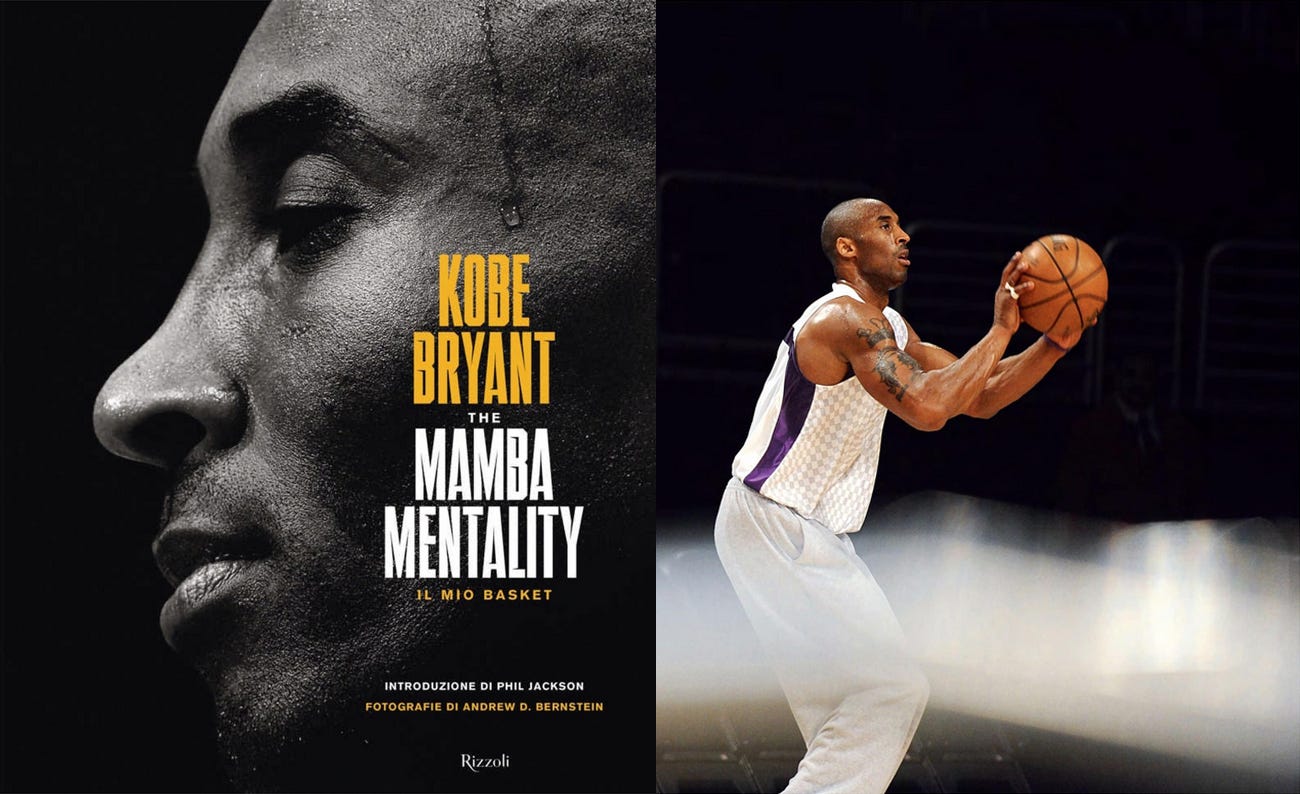
Then there is the modern version of the same idea, embodied by The Mamba mentality of Kobe Bryant (btw I love him and the Hardcover Book is simply awesome!) and the obsession with waking up earlier than everyone else. Do more workouts than anybody else. Being obsessed by self improvement. The narrative is simple: if you start your day before the world, you gain an advantage. And in some cases, that is true. But what is often overlooked is the recovery capacity behind that lifestyle. Kobe first talent was the speed of recovery! Not common thing.
For years, I tried to operate like that. I pushed myself to do more, sleep less, and compress everything into the same 24 hours. It worked, up to a point. Then it stopped working. I had the feeling I needed something different to switch to the next level and remain healthy in the long run.
Discussion
1. The Illusion of More
At some stage, you realize that the equation is flawed. More time does not automatically translate into more output. In fact, beyond a certain threshold, it reduces it. Sleep is not passive time. It is the phase in which everything you do during the day gets consolidated. The body rebuilds, the brain reorganizes, and the system resets. Without that phase, you are not extending performance—you are eroding it.
2. Context Beats Discipline
What makes this even more complex is that most of the models we follow are not built for our context. The obsession with waking up at five in the morning, popularized by books like The 5 AM Club, comes largely from environments like the US West Coast, where waking up early aligns you with global markets. When you operate from Asia, as I do, the equation flips completely. Europe is still asleep in the morning, and the US is offline. Forcing an early schedule in that context does not create leverage; it creates misalignment.
3. Sleep Is a System, Not a Number
Over time, I started to understand that sleep is not just about how many hours you get. Of course, duration matters, and the idea that you can function long-term on four or five hours is simply wrong. But what matters even more is how you sleep and how consistently you do it. Sleep is structured in cycles. The early part of the night is dominated by deep sleep, which drives physical recovery. The later part is dominated by REM sleep, which drives cognitive performance. If you disrupt one of the two, you compromise the outcome of the entire system.
4. Evolution Already Solved the Debate
There is one argument that, for me, closes the discussion completely.
If sleeping less was a winning strategy, evolution would have selected for it.
Over millions of years, the most efficient organisms survive. Efficiency means using less energy while maximizing output and survival. If humans could perform better with four or five hours of sleep instead of seven or eight, natural selection would have pushed us in that direction.
But it didn’t.
Sleep remained. And not just marginally—it occupies a significant portion of our lives. That means it is not a flaw in the system. It is part of the system’s optimization.
What we often try to “hack” has already been optimized for us over millions of years.
So when we cut sleep to gain time, we are not becoming more efficient. We are going against a system that has already proven what works.
5. The Turning Point: Prioritizing Sleep
The biggest shift for me came when I stopped treating sleep as something to fit around my life and started treating it as something that defines it. I made a decision that would have sounded counterintuitive before: if I have to choose between sleeping more and doing an early training session, I sleep.
That was not an easy shift, especially as someone who trains consistently and values discipline. But I realized that training without proper recovery is simply a weaker version of both.
6. Building a Personal Sleep System
What I discovered, through years of trial and data, is that sleep is highly personal but not random. There are clear patterns. Training earlier in the day improves my sleep, while intense sessions late in the evening make it worse. Heavy dinners and alcohol reduce sleep quality significantly. On the other hand, consistency in timing, mental decompression before bed, and managing light exposure make a visible difference. Even supplements like magnesium glycinate have helped me increase deep and REM sleep.
There are also elements that surprised me. Light screen usage to relax does not negatively impact my sleep, while watching intense movies does. This reinforced something important: sleep is deeply individual, and you need to build your own system rather than blindly follow generic rules.
7. Sleep Drives Mood, Mood Drives Performance
The most important realization was not about optimization, but about impact. Sleep is the single most powerful driver of my mood. When I sleep well, I am more positive, more focused, faster in thinking, and more effective in decision-making. When I don’t, everything deteriorates.
And because mood influences behavior, and behavior influences results, sleep becomes the hidden variable behind performance. This is something I did not fully understand for years. I used to attribute fluctuations in energy or effectiveness to external factors. In reality, most of it was driven by sleep quality. Once you see it, you cannot unsee it.
8. The Long-Term Game
There is also a longer-term dimension that is often ignored. It is true that you can achieve great results while sleeping little. History is full of examples that prove it. But there is a cost, and it usually comes later. The impact on cardiovascular health, cognitive decline, and overall longevity is well documented. If the goal is not just to perform, but to perform for decades, then sleep is not optional. It is foundational.
Conclusion
If I had to choose one single lever to improve performance, I would choose sleep. Not training, not nutrition, not mindset. Sleep.
Because what I have experienced, consistently, is that one or two extra hours of quality sleep, combined with regular timing, can change everything. Recovery improves dramatically, mental clarity increases, and energy levels shift in a way that no other intervention can replicate.
The real shift is understanding that performance is not about doing more hours. It is about operating at a higher level during the hours you are awake. And that level is determined, to a large extent, by how you sleep.
If there is one idea I would leave you with, it is this:
You don’t win by extending your day.
You win by upgrading your night.
References
Mamba Mentality (awesome tea book!)
Benjamin Franklin autobiography
CEO with Crazy travel schedules - WSJ interviews
The secret of better sex - full night sleep - WSJ
Netflix’s biggest competitor: sleep
Great piece, Simone and well worth the wait. The hard part is that the people who need sleep the most are usually the ones cutting it the most.